


A rapid prototype is a quick, low-cost model of your product, built to test whether people actually want it before you invest in building the real thing. In this guide, you’ll learn how rapid prototyping works, why it saves time and money, and which tools to use — including the new wave of AI prototyping tools.
When you’re innovating (launching a new product, service or company) you are simply trying to answer 3 questions…
- Is your product desirable?
- Is your product feasible?
- Is your product viable?
*Check out our long-form blog on this here.
Rapid prototyping will answer the desirability aspect of this as it will confirm to you whether your users will love and use your product, to solve the problem you’ve chosen to solve.
What is a Rapid Prototype?
Rapid prototyping is akin to prototyping on steroids. It's a fast-paced, efficient approach to creating high-fidelity prototypes within a condensed timeline compared to a traditional approach to prototyping.
Rapid prototyping is a method that accelerates the prototyping process, swiftly transitioning your idea from the nebulous realm of thought into a functional model that you can present to potential customers and investors.
It offers swift progression through multiple rounds of feedback and iterations, thus saving time and resources. This is exactly how we worked on a recent project with Prosper. We completed 5 rounds of user interviews and made over 500 changes to our proposition within a couple of months. Each change improved the site, piece by piece.
The further down the road you go, the harder it becomes to iterate because much more work would have gone into the build.
E.g. It’s much easier to change a written feature list than it is to update designs. To go further, it’s much easier to update designs than it is to change the actual, functional product.
That’s why rapid prototyping works so well, as you get in the habit of iterating early and often, saving yourself time and money in the long run.
Note: Rapid prototyping isn't just about speed. It's fundamentally about learning fast, validating ideas quickly, and making improvements based on real feedback.
Advantages of building a Rapid Prototype
- Cost-effective: Rapid prototyping is budget-friendly as it allows for fast iterations and a short time to launch, enabling you to discard what's not working and improve what is, thus preventing costly mistakes down the line.
- User-Centric: It enables you to validate your assumptions with real users early in the design process, ensuring that you're building a product that genuinely meets your users' needs.
- Risk Mitigation: By testing and validating your assumptions early, you reduce the risk of failure significantly.
- Facilitates Investment: A well-crafted prototype can help convince investors of the potential of your idea, thus aiding in securing funds.
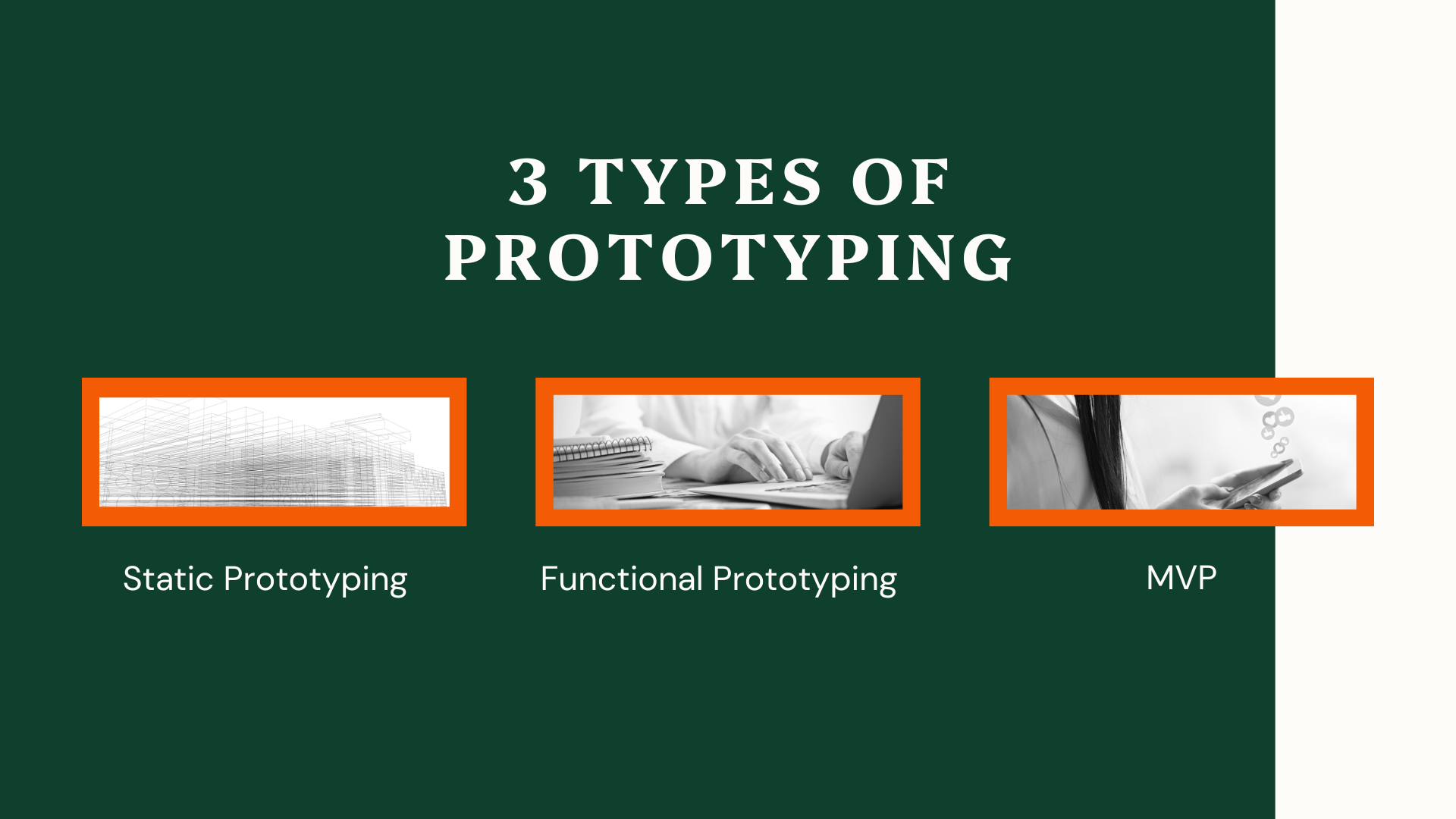
There are different types of prototyping…
Static Prototyping and Wireframes
This is typically the first stage of prototyping. Static Prototypes or ‘wireframes’ are the creation of a visual representation or mock-up of a product. It is not interactive or functional in any way at this stage. Instead, it's a way to visualise and communicate your ideas without building a working model.
High Fidelity, functional Prototype (we use Figma for this)
A high-fidelity prototype looks and feels like the real product — screens you can actually click through — without any working back end. It’s the fastest way to properly test desirability.
For example, if you produce a high-fidelity version that lacks user desirability, then chances are you’ve gone down the wrong route in terms of the problems you are trying to solve.
However, if the user's response to the prototype is positive, and they suggest they’d pay for it, then you have evidence to suggest you should continue. This is exactly what we did with an early internal bet, ‘Stylemate’. By creating a High Fidelity Prototype for a clothing idea that sought to secure an effortless style for the busy individual, we gained a much deeper understanding of whether the product could work.
Actual MVP
A Minimum Viable Product involves building a new product with the minimum set of features necessary to satisfy early adopters. The main goal of an MVP is to quickly release a product version to the market to truly validate your underlying assumptions, gather feedback and learn from real users.
A key question remains, how well do each of these options show us how desirable our product is?
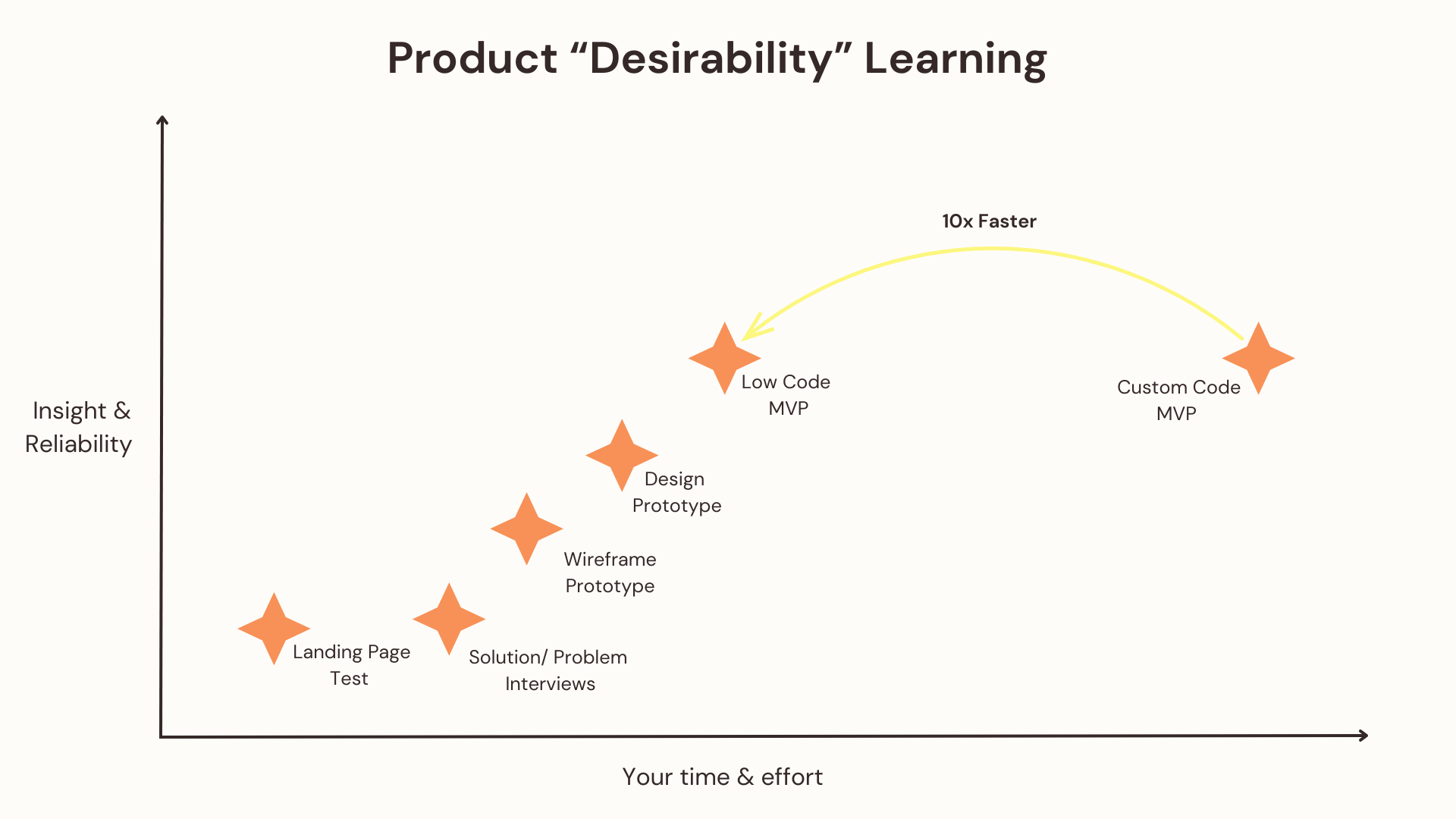
- Whilst building a full MVP will always be the most thorough and reliable way to gain user insight (see above), it is not the only way- especially if you want to move quickly.
- At Mindlace, we would never recommend an entrepreneur or business jump straight to an MVP, before testing some of the earlier steps that we have outlined above.
So, before spending loads of time and effort building an MVP, only to realise it’s not desirable, complete these tasks instead:
- Landing Page Test
- Solution/ Problem Interviews
- Wireframe Prototype
- Design Prototype
Tools to build a Rapid Prototype
To get started with rapid prototyping, you need to be familiar with some of the excellent prototyping tools available in the market. Here are our top 5 recommendations:
Figma
Figma is a cloud-based vector graphics editor and prototyping tool. It boasts an extensive component library and offers gesture simulations and animations.
Maze
We use Maze to conduct User Interviews. The platform allows you to create and send usability tests within seconds, taking the user through whatever journey you are deciding to test. Typically, we use Maze for landing page tests and proposition understanding tests.
Webflow
Webflow is a leading low/ no-code platform for creating marketing websites, providing an efficient way to get web design and development done quickly.
Bubble
Bubble is a no-code app development platform that lets you design and build apps without having to write any custom code. Like the other platforms we have mentioned, Bubble makes app building so much faster than traditional, custom-code methods.
Mixo
Mixo uses AI to generate webpages in seconds- no code or design required. This is great for quick landing page tests.
A note on AI prototyping tools 🤖
Since we first wrote this guide, AI prototyping has exploded: there is now a whole category of tools that can turn a plain-English description into a working prototype in minutes. That doesn’t change the method — it compresses it. The questions you’re testing (is it desirable? would people pay?) are exactly the same; you can simply run more iterations, faster, and get from wireframe-quality to functional-feeling prototypes far earlier. The discipline of testing before building matters more than ever, precisely because building has become so easy.
Prototype with Mindlace
The Mindlace Pathforger framework is our end-to-end approach to innovation. It takes you from the idea stage, all the way through to the product launch and beyond. The framework outlines all the activities required to launch a successful product in the most efficient way.
That’s why within the framework, we include activities to complete each type of rapid prototyping we have discussed in this blog before we go on to build a solid MVP for either ourselves or our clients.
If you are intrigued by our unique Pathforger framework, formed by our own innovation experts who have spent years in the startup industry, get in touch today.
We would love to help you through the product prototyping journey and help you Pathforger your product 10x quicker than you will elsewhere.