


In this guide, you’ll learn exactly how to take meeting notes people actually read: a clear hierarchy, scannable bullet points, and action items with owners and due dates. It works because good notes are built on one thing — clarity — and clarity can be systematised.
Sloppy written communication wastes enormous amounts of time: mixed messages, wrong interpretations, and action items quietly forgotten. Clear and crisp notes are the antidote.
Quick answer: the meeting notes method
- Structure notes with a clear hierarchy: CAPS bold headings, bold sub-headings, bullet points beneath.
- One point per line; keep notes as short as they can be.
- Every action item needs an owner, a due date and an explicit, completable goal.
- Share polished notes promptly after every meeting — no meeting without them.
But what exactly do we mean when we say ‘clear’? It’s a word used constantly in relation to communication, yet almost never concisely defined. In this blog, we’ve gone and done that…
What ‘clear’ actually means in meeting notes
High quality punctuation and grammar really matters (and so does consistent formatting).
- Why? It shows a level of care. You’ve taken the time to proofread, showing you care what the other person sees.
- Note: This is not the way a typical white-collar industry lawyer, for example, would write. More fool them. These techniques were taught to me by some of the most effective former Apple employees (and used by Steve Jobs himself- I think that says they’re more than good enough).
How to take meeting notes: the method
Going more specific, let’s outline the importance of great meeting notes, and exactly how they should be taken.
Whilst one of our working principles at Mindlace is to hold as few meetings as possible, we do still keep to strict weekly or fortnightly sprints. Therefore, sprint plans and reviews are an important aspect to the way we work. Meeting notes form a key output of these meetings, as they keep us aligned, on track and in the know as we move into the sprint itself.
A quick word on AI notetakers. These days, most teams have an AI assistant transcribing their calls — and that’s genuinely useful. But a raw transcript is not a set of meeting notes. The value of notes lies in curation: deciding what actually matters, resolving contradictions, and shaping explicit action items. Treat the transcript as raw material, then apply the method below.
Why are meeting notes so important?
- Quality notes = quality written communication = clear and structured thinking.
- Communication is the bedrock of a smooth running project/product development process.
- Meeting notes ensure everybody is on the same page and directs their energy to the correct areas.
- This enables more innovation, faster. Innovation is what allows companies to succeed long-term.
- No meeting should ever happen without a designated note taker and quality, well drafted notes shared at the end.
- Note taking is not a ‘Junior’ thing to do, as it is sometimes thought.
- It is in fact one of the most important aspects to a successful project and is therefore an important responsibility not to be looked down upon or glossed over as a nice to have.
The 5 components of effective meeting notes
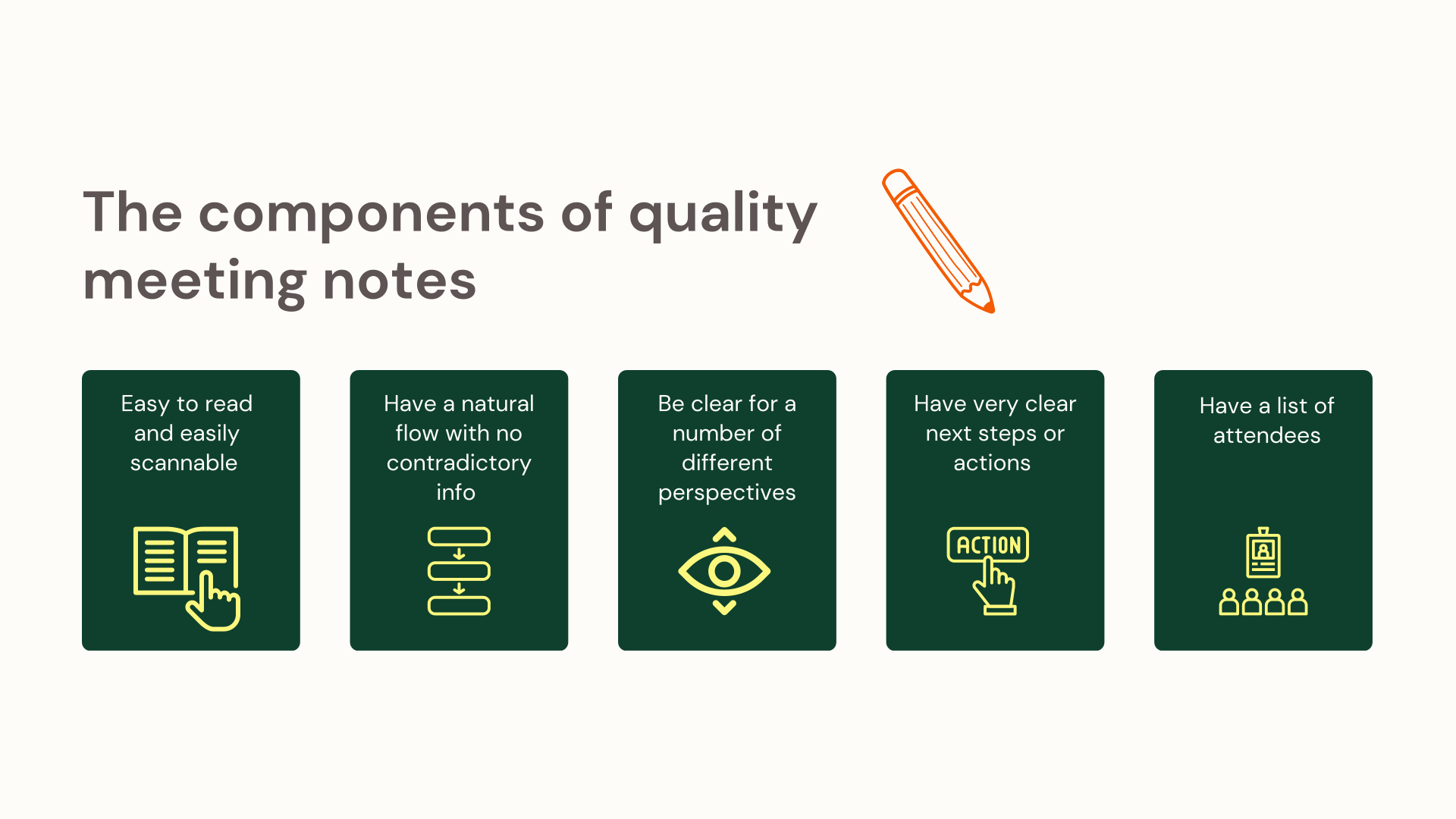 Infographic titled 'The components of quality meeting notes', with the 5 elements that make up effective notes.
- They should be very easy to read. Everyone is in a rush- no one wants to spend hours reading notes (and quite frankly, they won’t). That’s why meeting notes should be easily scannable.
- They should flow naturally and not contain any contradictory information. That suggests the meeting was contradictory and would itself create an action item to resolve this conflict.
- They should enable people from varying perspectives to understand important decisions or viewpoints.
- They should have very clear next steps i. action items ii. action item owners iii. appropriate due dates.
- They should have a list of attendees, which allows one to easily track who should and shouldn’t be in ‘the know’ from the meeting itself.
How to structure and format meeting notes: step by step
Here is exactly how your next set of meeting notes should be structured and formatted to maximise efficiency and clarity of communication amongst your team.
- Have a clear hierarchy of information.
- Your main heading should be in ALL CAPS and bold.
- Sub-categories should be bold.
- Information for sub-categories should be in normal type.
- Write in bullet points; aim for one point per line.
- Try not to indent bullet points more than twice, as this makes notes harder to read.
- Try to keep notes as short as they can be.
- Action items are well formed and easily actioned by the responsible party (see below for the action items section).
- Your formatting should be systematic and consistent.
- This means you won't use random colours/ incOnsistEnt fonT siZes / all caps IN mid-sentence etc. This makes things more difficult to comprehend for the reader.
What makes a quality action item?
- Action items should be very clearly delineated.
- Use colour to ensure people see who owns which items and their respective due dates.
- Use a minimal number of colours. Don't choose colours that are hard on the eye, as again, that makes reading notes harder.
- Treat due dates with discipline. Follow up with people who have action items - they will soon learn that you’ll chase and thus it’s easier just to do them when they say they will!
- Action items should be explicit and completable goals, not something fluffy.
- Quality Actions items are therefore not easy to write and can often take 2 to 3 versions to get right. See an example below…
- ACTION: Read through notes, understand them thoroughly, and raise any questions you have (Julie, 21.09.2023).
- Action items can be raised within sub-categories or bundled together at the end of the notes themselves.
- Sometimes it is worth doing both. Use your judgement. The simple goal is to ensure everyone sees, understands, and adheres to them.
Good written communication skills are relevant to everyone…
So, that’s an overview of how we find it best to write meeting notes, both internally and externally at Mindlace.
These tips come from many years managing hard and complicated projects, for different companies, and teams of varied disciplines and context.
However, no matter what your company size, our guidelines for written communication remain the same. Prioritise clarity and efficiency to get the most out of your writing, both for yourself and your clients.